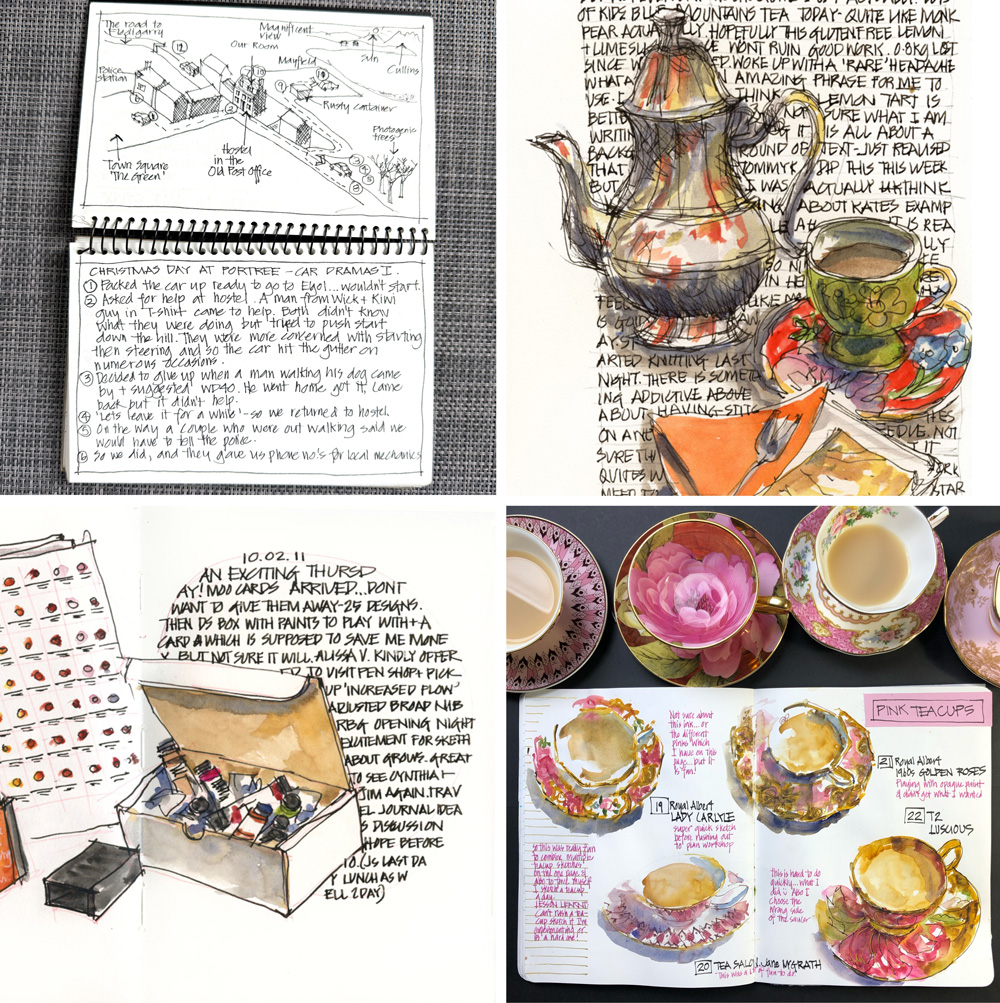
As part of my prep for the Live Version of Sketchbook Design (starting this week on Wednesday, 9th September), I’ve been looking through old sketchbooks and have been struck by how important it is for me that my pages contain both images and words.
It’s been interesting to see how my combination of text and sketches has evolved over the years, and today I want to share a few examples with you. (Note: I included some of these in an email I sent out recently, but I’m adding more examples in this article!)
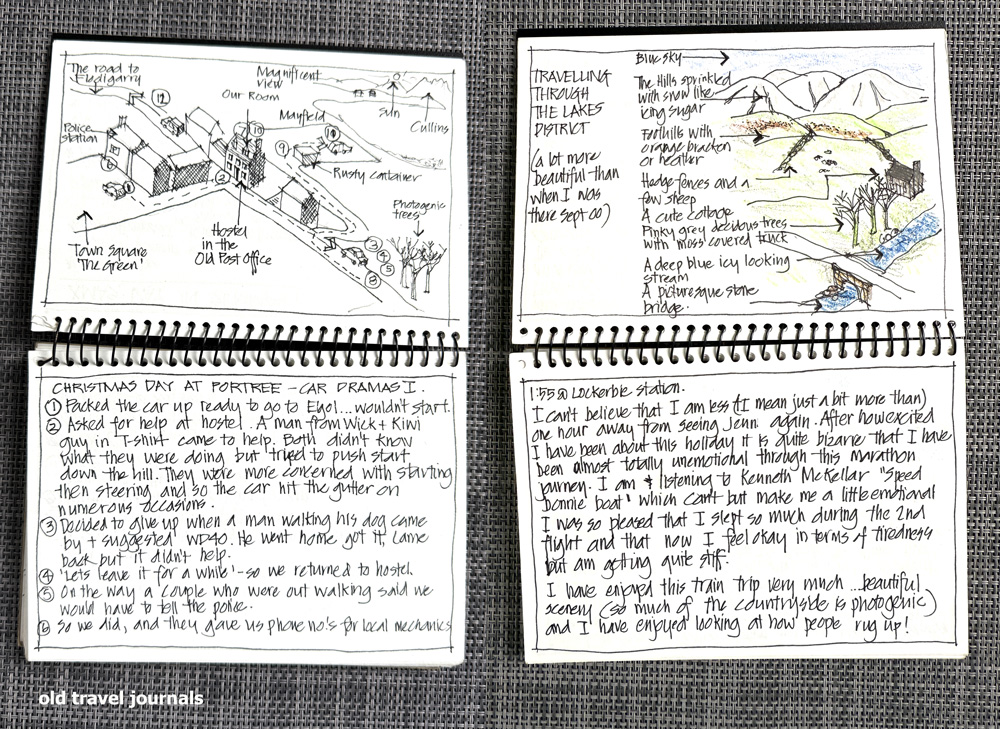
Before I started regularly sketching, I kept written journals when I travelled and only occasionally added a drawing.
Whenever I included a sketch, the stories were richer.
So I was determined to learn how to paint with watercolour so that I could create more image-based travel sketchbooks.
In January 2007, I started sketching my life in preparation for a 5-week visit to Europe later that year. (Sketching my life was simply a means of training for this upcoming trip!)
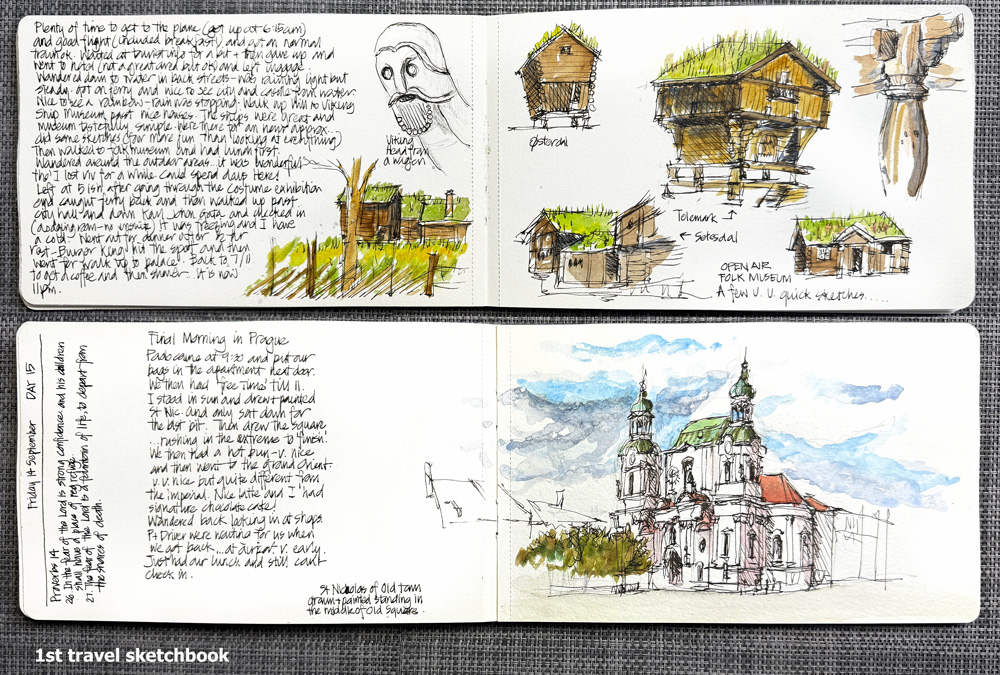
I was so happy that I filled two Moleskine sketchbooks on that trip – filling my pages with a few sketches per day, accompanied by my usual written accounts of my adventures.
I became obsessed with sketching after this trip, and sketching my life became an end in itself. It helped me see beauty in the ordinary and enjoy the small moments of life.
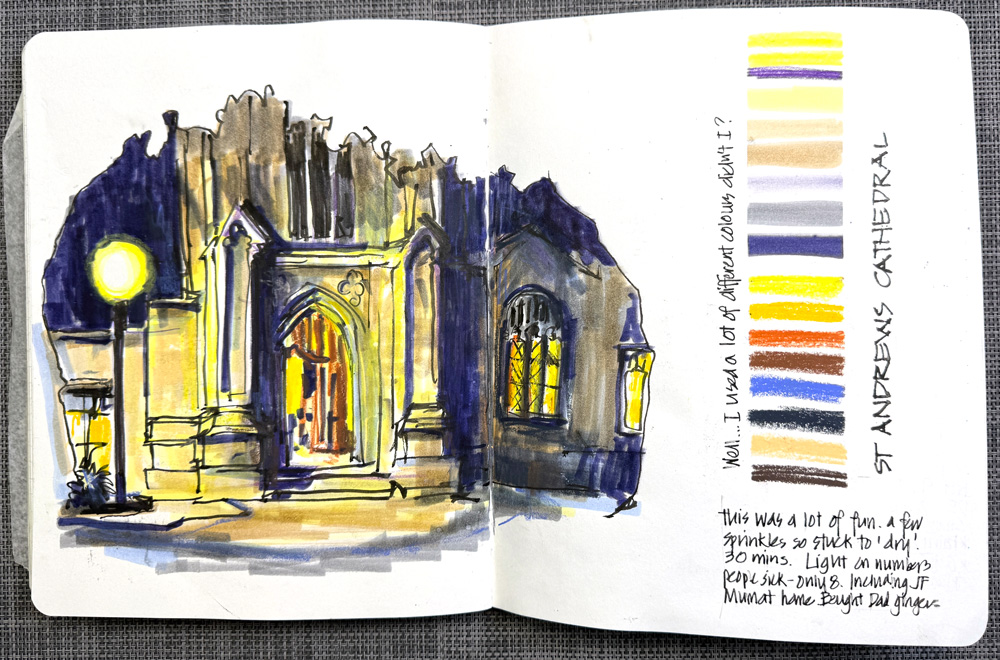
Over the years, I created habits to incorporate sketching into my busy everyday schedule, but I often rely on writing to complete the narrative for each day.
Special memories are encoded into my sketches, but my handwritten notes record (often with a touch of humour) additional little moments that I would otherwise forget.
I’ve also come to realise that the process of composing my sketches and notes on the page is a very distinct creative act – one that I enjoy almost as much as the sketching itself.
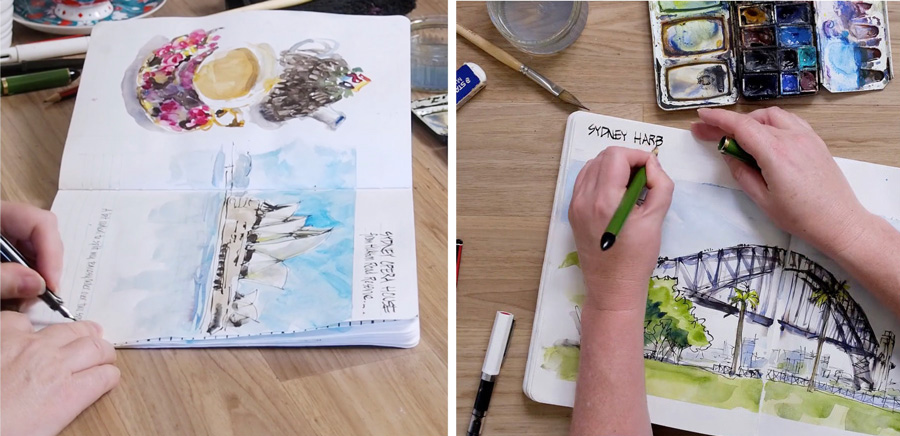
Here are some examples (from my sketchbooks over the years) showing a few different ways I add text to my sketchbook pages.
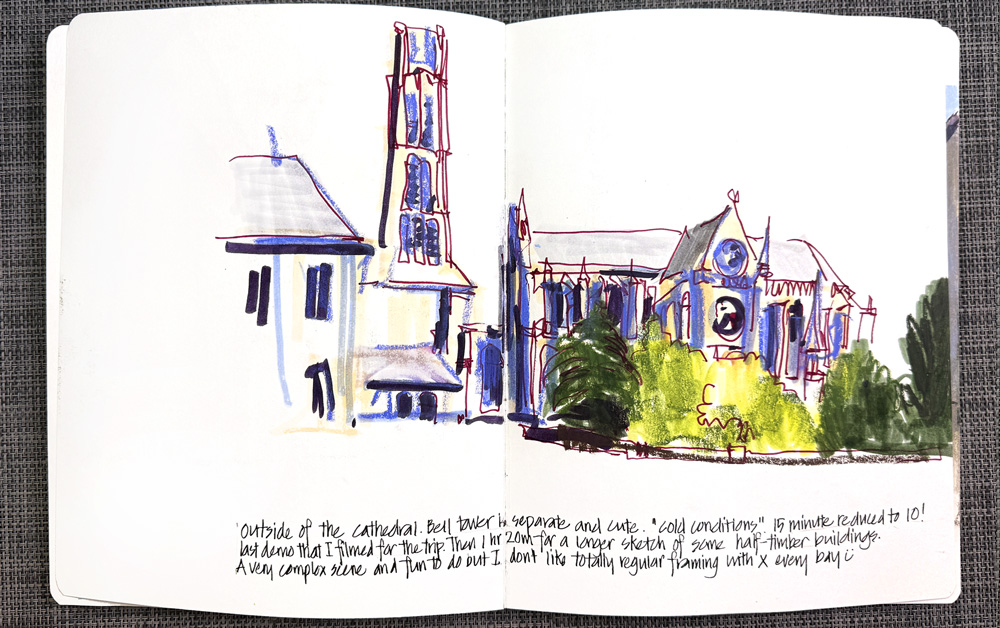
Writing in a long text block aligning with the width of my sketch.
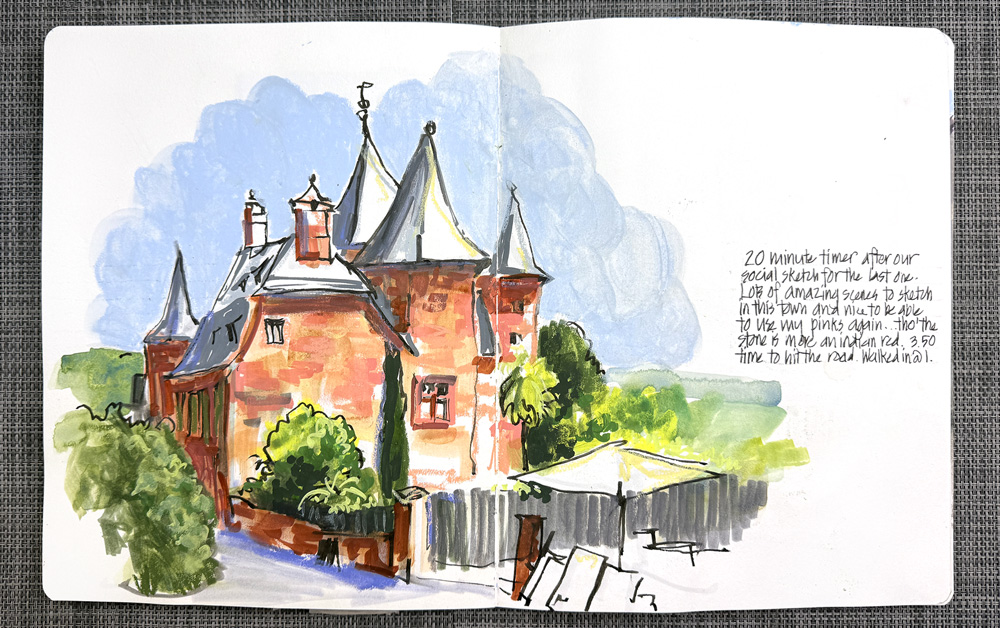
Writing in a small text block fitting into an open-corner of my sketch.

Columns of text.
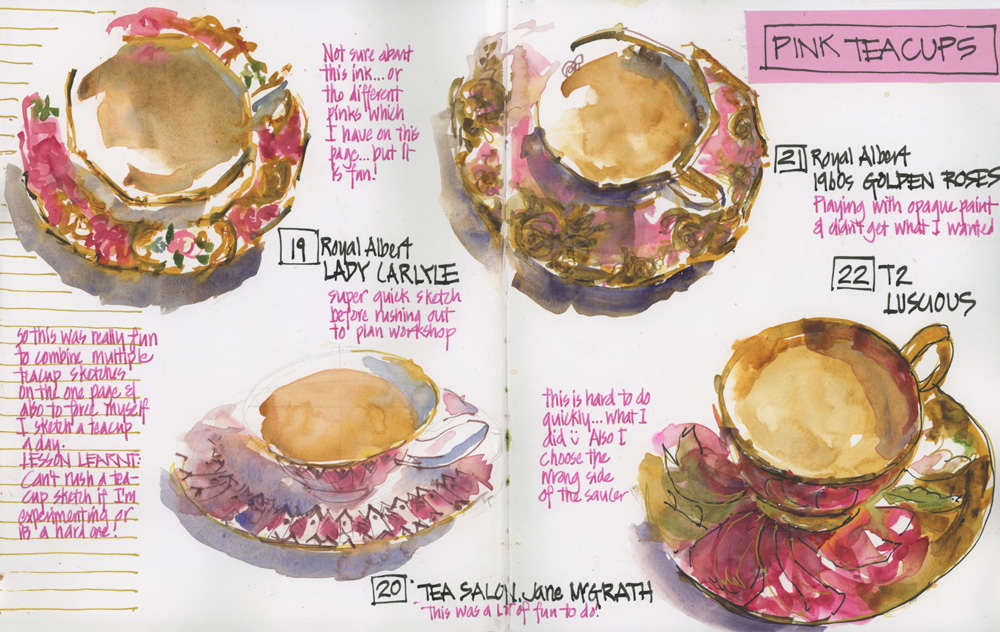
Varying the colour of my text in random text blocks across the spread.
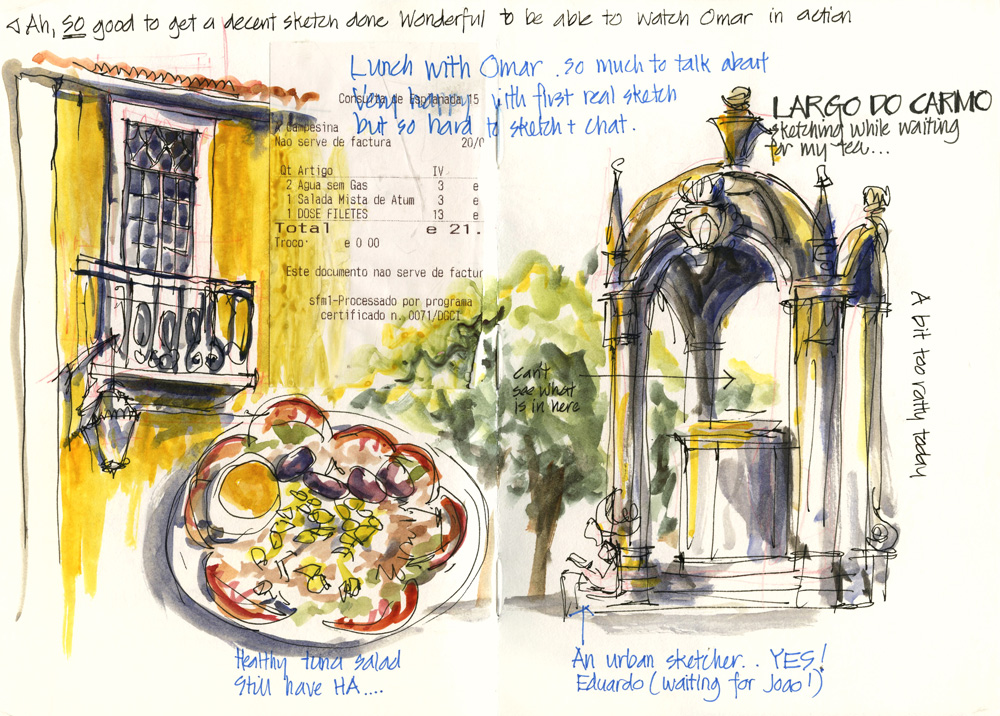
More random notes across the page.
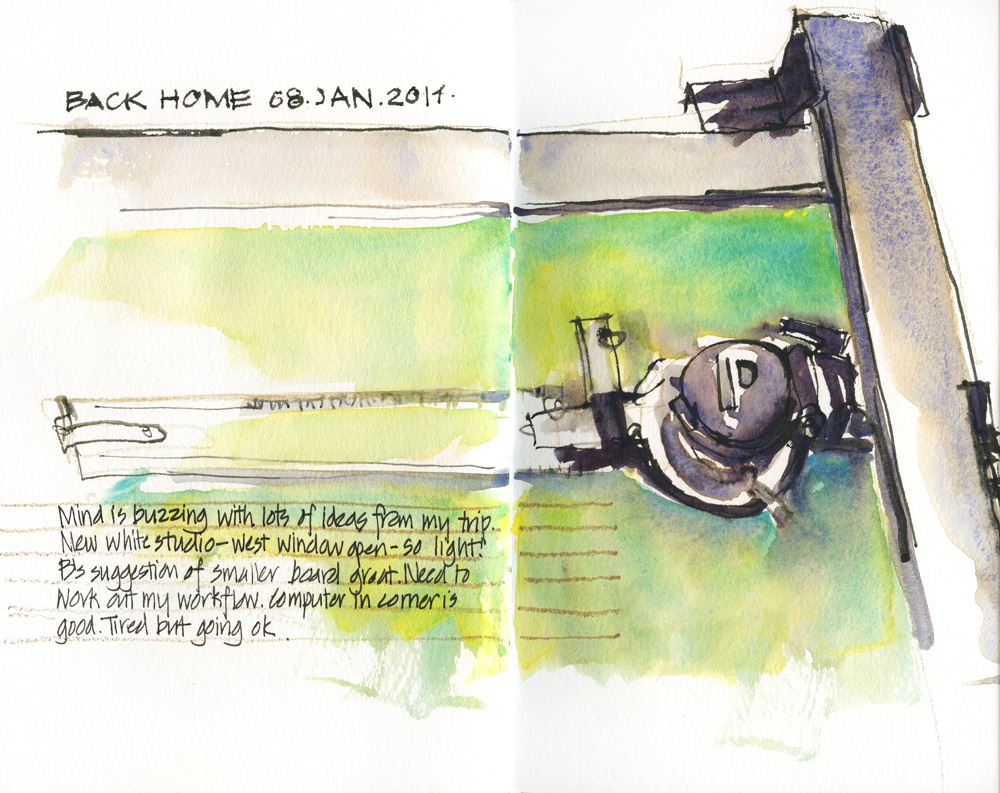
Text incorporated into the sketch.
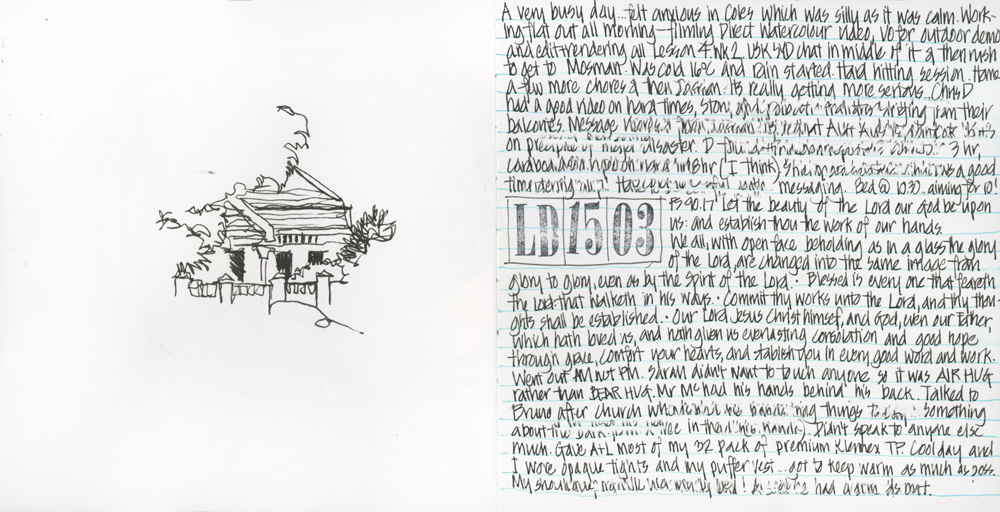
A full page of text contrasting with the openness of the opposite page.
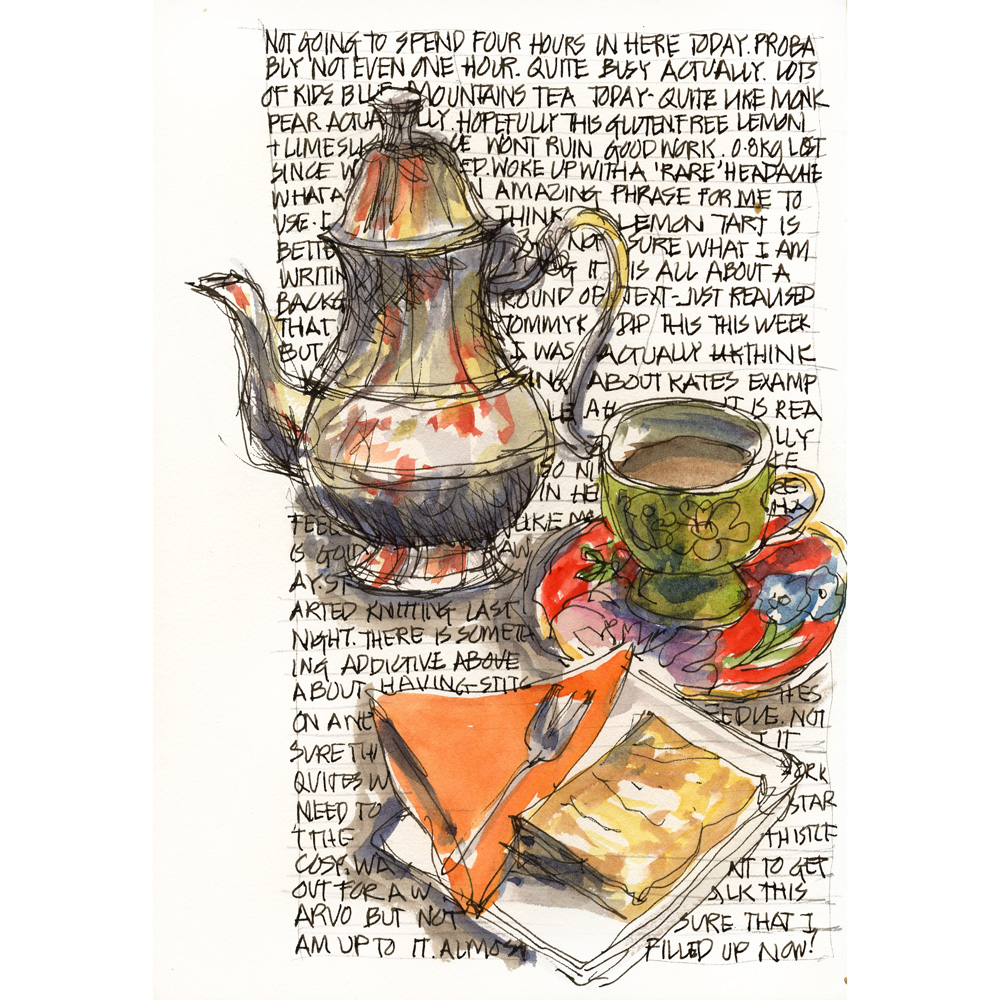
Text as background.
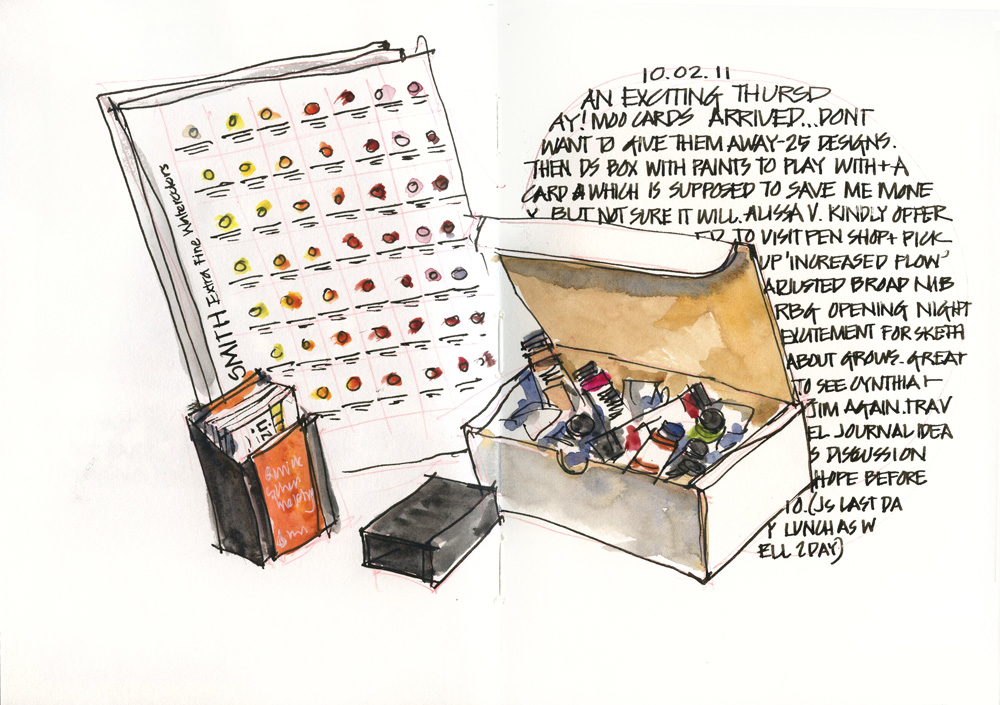
Text in a shape with an overlapping sketch.
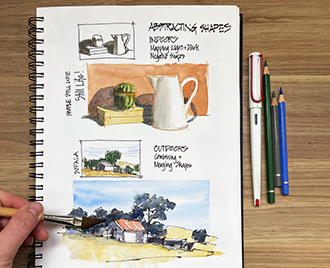
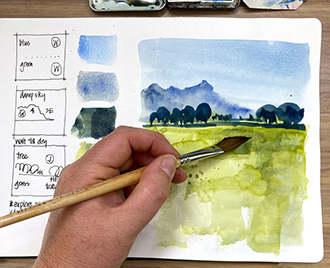
There is so much that you can do when you add a bit of writing to your sketchbook pages! And this is something that I’m really looking forward to exploring inside Sketchbook Design in the coming weeks, as there are always so many wonderful ideas shared in the classroom!
Just for the record: You don’t have to have neat handwriting, or journal your life as I do- there are lots of different ways to add text that will contribute to story-telling within your sketchbooks. And yes, we also look at these options inside Sketchbook Design.
I’m so excited to be going through this course again – starting this week!

Live Version starting 9 September 2026
Work through the lessons in 9 weeks with an inspiring group of sketchers
+ take part in 9 bonus weekly Q&A livestreams
Find out more about Sketchbook Design
Buy Sketchbook Design with Foundations and Watercolour and save!
Find out more about the Sketch Your Life Bundle
Finally, I have a question for you…
Do you add writing to your sketchbook pages?
If yes, I would love to hear why you do and what kind of things you write about.
If no, why not?
If it is something that you wish you did more of, I would love to know what’s stopping you. What are the barriers to writing in your sketchbook?
I’d love to hear your thoughts in the comment section below.


16 Comments
Do I add writing to my sketchbook pages? Sometimes, but not often. There are three things that make me reluctant to add writing: I don’t know what to write; I’m afraid to ruin the page/drawing by adding text; and, oddly enough, putting thoughts in writing on the page makes me feel a little embarrassed or exposed somehow.
–
Thanks for sharing April – I know many people feel the same as you do!
A few thoughts,
– adding writing in a text block (rule guidelines first) helps a lot!
– you don’t have to write thoughts – maybe what you observed from your subject, if on location, what happened while you are sketching
I’m sure that this topic will come up in the course, and I will be very interested in what the group says about it!
I used to journal then on my first architectural tour to Italy in 2022 I started to transfer my drafting skills to sketching and sketches have become an important element of my travel journals. I always at least add the date and location. They say a picture is worth a thousand words but that’s not always all of them! Besides I think text adds a nice element, creating a ticker texture to the page. However I would like to learn to plan my text as part of the composition and not always just an afterthought.
Hi Maureen – totally agree that words add more to images. We will definitely be discussing planning for text… or simply leaving big areas of white space so you can decide on the exact placement of text later.
April perfectly represented the reasons why I don’t use text more often in my sketching journal. At the same time, I’m very intrigued by what you do when you integrate text and sketches, making it an illustrated diary of your life that integrate text and images so nicely. I’m trying to add text more often and see if practice will make it easier and more satisfying.
Hi Antonella – I share a few ideas in my reply to April. I will add that I try to keep a more personal diary as well for thoughts and emotions. SO the writing in my sketchbooks is more a record of what happened during the day in general terms.
I’m a writer (as in, I get paid for it) so I can’t imagine not including text on my pages–it’s my primary way of showing what I “see” in a scene, experience or place. My goal is to cut down on the writing and have more images!
The toughest part for me in writing in my sketchbook these days is that I’ve inherited a pretty profound tremor in my dominant hand–I’m learning to work with it to create (and accept!) “loose” images/sketching/painting but “loose” handwriting can be tough to read!
Hi Tonya – so sorry to read about your tremor but glad that you are accepting the loose writing. I’m exploring ways of writing single words rather than full sentences to reduce the amount of text on my pages.
I do sketches in my journal daily-I use the dot journals and they take watercolor pretty well- I don’t have to be careful on these pages, so can experiment and try new tools and products and practice. These always have text and the date-I love exploring letter-types, and colors in making titles.
Then I nature journal and those always have text to explore, observe and research the item I illustrated and explain what it is, how it works, any unusual characteristics and these are commonly titled.
Then there is a sketchbook for drawing/painting just because I find a scene fascinating or beautiful. I usually date these, but commonly no text except for the date and maybe a place name.
It is always fun to use text creatively
Thanks for sharing Ellen. I’m impressed that you can maintain 3 separate books. love it!
What really stops me from writing more is that I don’t like my handwriting. Somehow, I don’t think it fits the sketches. Neither do titles nor text blocks. Then I see text in other sketchers’ work such as yours, and I just love it.
Hi Maria – have you ever tried writing (printing rather than cursive) smaller and/or more condensed so that your writing appears primarily as a text block? Leaving enough white space helps too.
I have always enjoyed writing, so adding text to my sketchbook comes naturally to me. After doing the Sketchbook Design course a few years ago, I was reminded how a block of text can help balance a page or add to the design. But when I’m out and about or in a new place I often have to do some research for the name of a building, church or whatever. Sometimes this leads me to asking a local and I’ve had fun even learning more about the subject I just sketched. And sometimes my writing sparks a fun memory when I look back at my sketches.
Hi Marta! Yes I love the extra info and memories that writing can add to our sketchbooks and yay! for a text block balancing the design of a page 🙂
I have kept a detailed daily journal for 42 years ( I’m 79). I am intrigued with the idea of sketching and writing and I admire Liz’s daily journal examples.
I did commercial art in the 70s and early 80s before that market dried up. I was a studio artist working in pen and ink.
Sketching is very different from drawing/illustration and I like the looseness and spontaneity. I have been trying to unlearn old habits and I did Liz’s foundation and building classes. I’m starting to get the idea.
As far as writing and sketching, I’m intrigued. I have started keeping a list of things I might have drawn on a given day. I hope the live course will spur me on to actually plan and complete a daily journal to go along with my written journals.
I
Thanks for sharing John (42 years of journals is amazing!) – looking forward to having you part of the cohort and seeing if you can incorporate more writing into your sketchbook.
NEWSLETTER
Subscribe for first notification of workshop + online classes and more.